
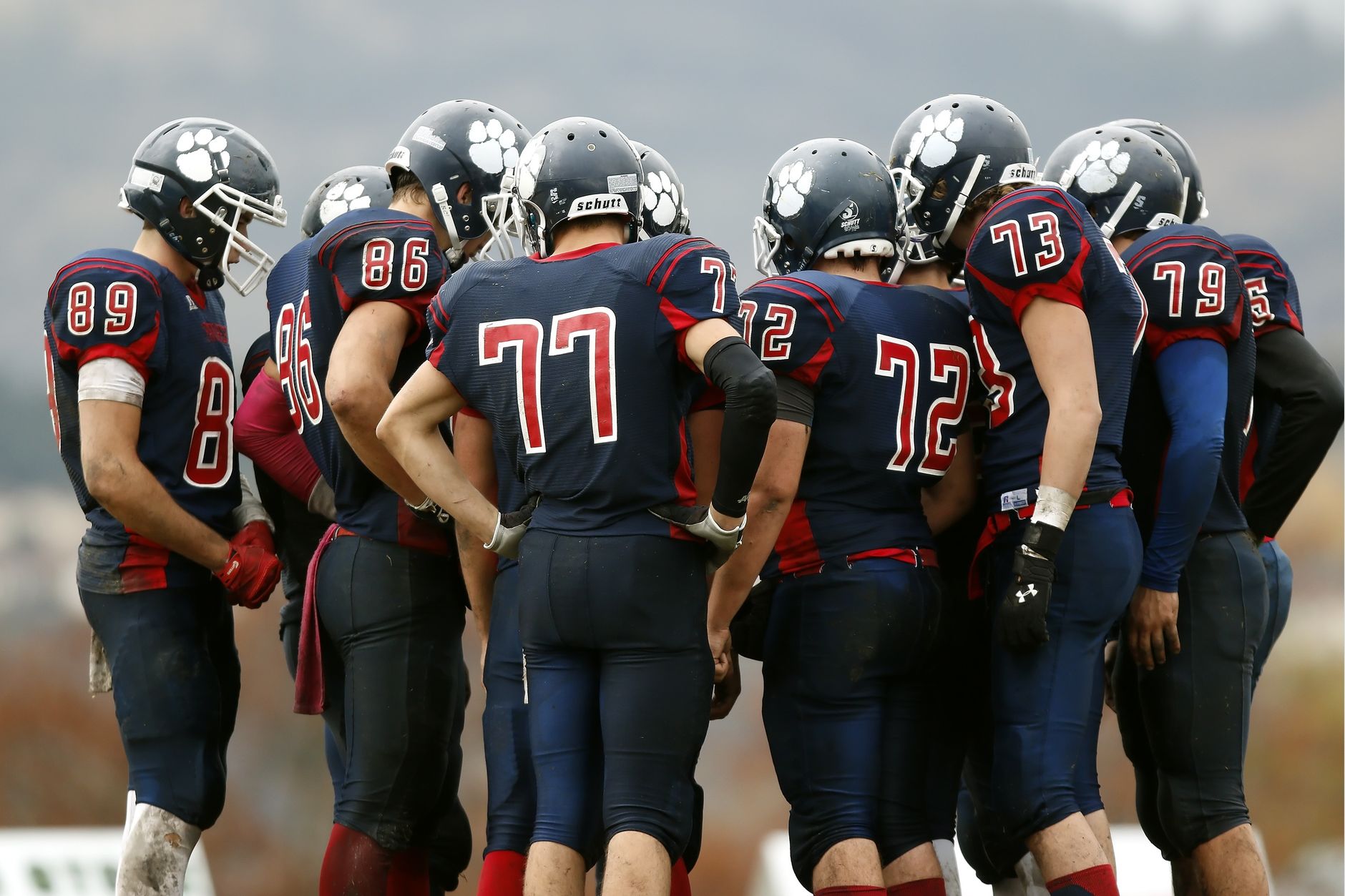
A football uniform has a difficult job. It needs to stay in place through sprinting, contact, tackling, blocking, twisting, and changing weather, while still letting an athlete move naturally. A uniform that looks sharp on a hanger can become a distraction on the field if the shoulders bind, the waistband slips, or fabric catches where it should stretch.
Fit affects comfort and how confidently a player gets into a stance, carries the ball, reaches to make a tackle, or turns their head to track a pass. The right approach is to assess the full uniform as a system: jersey, pants, pads, underlayers, belt, and any sport-specific protection all need to work together.
Start with the movements football actually requires
Before discussing measurements, it helps to think about the motions a player repeats during a game. Linemen need deep knee and hip flexion in a three-point or two-point stance. Receivers and defensive backs need unrestricted arm swing, fast shoulder rotation, and long strides. Quarterbacks need room through the upper back and throwing shoulder, while linebackers need a balanced fit that holds up through every kind of movement.
A useful fitting check is to have the player wear their complete practice setup, including pads and base layers, then move through a short sequence: squat, lunge, raise both arms, reach across the body, jog, backpedal, and assume their usual stance. The uniform should follow those movements without tugging sharply, opening excessively, sliding downward, or exposing equipment that ought to stay covered.
Why pad-ready fitting changes everything
Football jerseys should almost never be sized based on a regular T-shirt alone. Shoulder pads add width and shape through the upper body, and pants must accommodate the hip, thigh, knee, and tailbone pads used by the player. A jersey that feels roomy in a change room may become restrictive after pads are added, while one chosen to fit bare shoulders may leave too much loose fabric over equipment.
Bring the actual pads to a fitting whenever possible. If a team is ordering before equipment arrives, use reliable pad dimensions and confirm which style each group will wear. Youth, high school, recreational, and adult programs can use different equipment profiles, and even small differences in shoulder pad bulk can change how the neck, sleeves, and chest of a jersey sit.
Getting the jersey shoulder line right
The upper jersey should cover the shoulder pads smoothly without feeling like it is being stretched over their edges. When a player raises their arms or reaches forward, the fabric should move with the pads rather than pull hard at the neck opening or climb toward the chin. A tight neckline and restricted armholes often show up first during this test.
At the same time, an oversized shoulder area is not a solution. Excess fabric can bunch across the chest and back, shift during contact, and give an opponent more material to grasp. The aim is a close, athletic layer over pads, with enough ease for the player’s full reach. Position matters, but every player should be able to extend the arms without a pinching sensation through the upper chest or underarms.
Chest, torso, and length need a practical balance
Through the chest and torso, a football jersey should be fitted enough to avoid large folds but not compressed to the point that breathing feels restricted. Players should be able to take a full breath, brace their core, and rotate at the waist without the jersey riding up. Watch for horizontal strain lines across the chest or back, which can signal that more room is needed.
Length is equally important. A jersey should provide coverage at the waist during a stance, sprint, and tackle, particularly once it is secured according to the team’s usual game setup. Too-short jerseys can work their way upward and distract the athlete. Jerseys that are much too long can gather under the waistband or create unnecessary loose material. Check the length while moving, not only while standing upright.
Sleeves should stay clear of hands and equipment
Sleeve length and opening size deserve more attention than they often receive. The sleeve should cover the relevant area of the shoulder equipment and sit securely without digging into the upper arm. When a player bends and extends the elbow, the sleeve should not bunch so heavily that it interferes with gloves, wrist tape, or natural arm motion.
For skill-position players, a clean range of motion around the shoulder and elbow can be especially noticeable when catching or throwing. For players who spend more time in contact, the priority may be keeping the sleeve stable and resistant to shifting. Neither goal requires a universally tight or loose sleeve; it requires a sleeve shape that matches the player’s arm size, pad profile, and preferred feel.
Football pants should move from the hips, not fight them
Pants need enough room through the seat and hips for squatting, driving, and changing direction. If the crotch feels low, pulls when the player drops into a stance, or restricts a high knee lift, the fit is not right. A proper fit allows the player to bend at the hips and knees without feeling as though the garment is pulling them back toward standing.
There should not be large, empty folds around the seat or upper thigh either. Loose fabric can twist, shift pads out of place, and make the uniform feel unstable. The goal is a secure fit that follows the body and protective equipment. In practice, that means checking both a deep squat and a short sprint, because an issue that is hidden in one movement may become obvious in the other.
Build pant fit around the pad arrangement
Whether players use integrated pads or a separate girdle system, the pants must hold the equipment in the intended positions. Hip pads should cover the hips rather than drift forward or backward. Thigh pads should stay centred over the front of the thigh, and knee pads should remain where they provide coverage as the player bends their leg. A good-looking pant fit is not enough if pads migrate during activity.
Have the player squat, kneel, jog, and rise repeatedly while checking pad placement. If the pads shift, the answer may be a different pant size, a different girdle fit, an adjustment to the belt or waistband, or a combination of these. It is better to identify the cause than simply tighten everything. Over-tightening can reduce mobility and create pressure points without truly solving the alignment problem.
The waistband should secure the uniform without digging in
A waistband should sit securely at the player’s natural wearing position and stay there as they run and bend. It should not roll over, cut sharply into the abdomen, or require constant adjustment. Players often compensate for a poor waistband fit by pulling the pants unusually high or low, which then affects the placement of the crotch, hip pads, and knee pads.
Try the pants with the belt or fastening method that will actually be used. A player may feel comfortable while standing still, then discover that the waistband loosens during repeated movement. Conversely, a fastening system that seems fine at first may feel uncomfortable after a few squats. The right level of security is firm rather than constricting, and it should support equipment without becoming a source of distraction.
Leg length affects both protection and footwork
The lower leg should be assessed in relation to the knee pads, socks, and cleats. If pant legs are too short, they can pull upward and leave the knee area feeling exposed or constrained when the player bends. If they are too long or too loose, they may bunch around the knee and calf, making movement feel less clean and potentially shifting protection out of place.
Look at the player from the front and side while they take a stance and jog. Knee pads should remain positioned over the knee, not drift up the thigh or turn sideways. The pant leg should also sit comfortably with socks and footwear. The small details matter here, because lower-leg discomfort is easy to ignore at the fitting table but much harder to ignore late in a game.
Compression is useful only when it remains comfortable
Modern football uniforms often have a close, compression-style feel. This can reduce loose fabric and help garments stay organized over pads, but closer is not always better. If a player experiences numbness, rubbing, restricted breathing, or difficulty making normal football movements, the fit has crossed from supportive to restrictive.
Players should also consider the base layers they prefer in cool, wet, or warm conditions. Adding a compression short, long-sleeve top, or weather layer changes the available space inside the uniform. Test the most likely game-day combination rather than assuming every player will wear the same amount underneath. A fit that works with a thin shirt may be too tight with a thermal layer, while a loose fit can become sloppy without one.
Different positions call for different priorities
There is no single ideal silhouette for every football player. Linemen may prioritize freedom at the hips, thighs, shoulders, and upper back for leverage and repeated stance work. Receivers, defensive backs, and returners often appreciate a streamlined fit that stays close during high-speed running. Quarterbacks may focus on shoulder mobility and a neck opening that stays comfortable through repeated throwing motion.
Still, position should guide the fitting conversation, not replace it. Two players at the same position can have very different builds, pad choices, and preferences. Avoid forcing an athlete into a cut simply because it is traditionally associated with their role. The best uniform is one that allows the individual player to do their job without thinking about the uniform.
Use samples and movement tests before approving a team order
For a group order, a sample fitting is one of the best ways to avoid broad sizing problems. Have a range of body types try representative jersey and pant sizes with equipment, and take notes on where adjustments are needed. Pay attention to recurring concerns, such as sleeves that run tight, pant waists that sit low, or jersey lengths that vary unexpectedly with different pad styles.
When teams are reviewing options for custom football jerseys and pants, it is worth asking detailed questions about cut, fabric stretch, pad compatibility, inseam options, and the process for confirming sizes. Clear size charts are helpful, but they are a starting point rather than a substitute for trying on equipment. A thoughtful fitting process protects both player comfort and the team’s investment.
Do not overlook fabric feel, seams, and ventilation
Fit is partly about dimensions, but materials and construction affect comfort too. A fabric can technically be the right size yet feel uncomfortable if it traps heat, feels rough under pads, or lacks stretch where the athlete needs it. Check how the material feels against the neck, underarms, waistband, and inner thigh, since these are common areas for irritation during long practices.
Seams should lie flat and remain comfortable as the player moves. Look for pressure points where seams meet pad edges or where multiple layers overlap. Ventilation panels can be useful, but they need to be placed where they preserve durability and coverage. Consider the conditions in which the team usually plays and practices, including rain, cold, and heat, rather than judging the uniform only in an indoor fitting area.
Consistent team sizing still leaves room for individual needs
Teams often want a unified appearance, and a consistent uniform program helps create it. That does not mean every athlete should receive identical sizing assumptions. Offering a sensible size range, recording each player’s fitted size, and allowing for equipment differences can preserve a coordinated look while respecting the fact that players have different proportions.
A broader apparel supplier may also help teams keep related gear consistent across the season. Resources for Custom Uniforms, Bags and Sports Apparel can be relevant when a program is coordinating practice wear, travel bags, spirit items, and multiple team uniforms. The main consideration remains functional use: each item should suit the activity it is made for, rather than simply match a graphic.
Learn from the fit principles used in other close-contact sports
Football is not the only sport where close-fitting apparel and full mobility have to coexist. Wrestling apparel, for example, needs to remain secure through rapid changes in body position while avoiding seams or cuts that chafe and distract. Looking at Custom Wrestling Singlet Designs can be a useful reminder that stretch direction, body-contouring construction, and freedom around the shoulders and hips matter across many sports.
The garments are not interchangeable, of course. Football clothing must work over pads and withstand a different type of contact. But the shared lesson is valuable: secure apparel should feel like part of the athlete’s equipment, not something they are continually managing. That principle applies whether a player is exploding off the line, changing direction in open space, or bracing for contact.
A quick game-day fit check catches preventable problems
Before the season and periodically afterward, players should check their uniform in full equipment rather than waiting for a problem to occur during competition. Confirm that the jersey covers pads properly, the pants hold each pad in place, the waistband is secure, and no seam or edge is rubbing. This takes little time and can reveal issues caused by growth, changed base layers, new pads, or wear over time.
Players should also speak up about discomfort early. A uniform does not need to be visibly damaged to create a real problem. Persistent pulling at the shoulder, a waistband that rolls, or knee pads that will not stay centred are all worth correcting. When jerseys and pants fit well, athletes can direct their attention where it belongs: reading the play, supporting teammates, and playing with confidence.